Disclaimer:
This guide is a summary document intended to provide the reader with an understanding of the general principles applicable to hydraulic testing on fire hydrants. None of the information provided in this guide should be considered professional advice. Project-specific guidelines and specifications should be established by licensed professionals, based on the characteristics of the processes and equipment. Project specifications and manufacturers' guidelines contained in shop drawings and manuals always take precedence over the information provided here. SynQ Consultants will not accept any liability claims and shall not be liable for personal and/or property damages and/or any other type of damage resulting from the use of this information. The reader acknowledges that decisions made based on the information contained in this guide remain their sole responsibility. The reader acknowledges that all specifications, procedures, and activities must comply with applicable local laws and codes, manufacturers' recommendations, and be approved by a licensed professional.
Fire hydrant water flow test objective
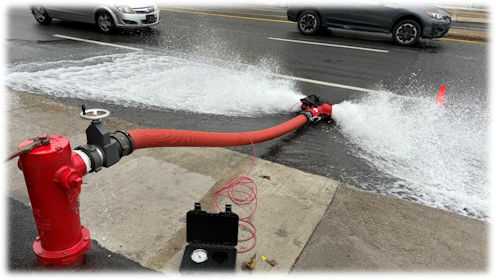
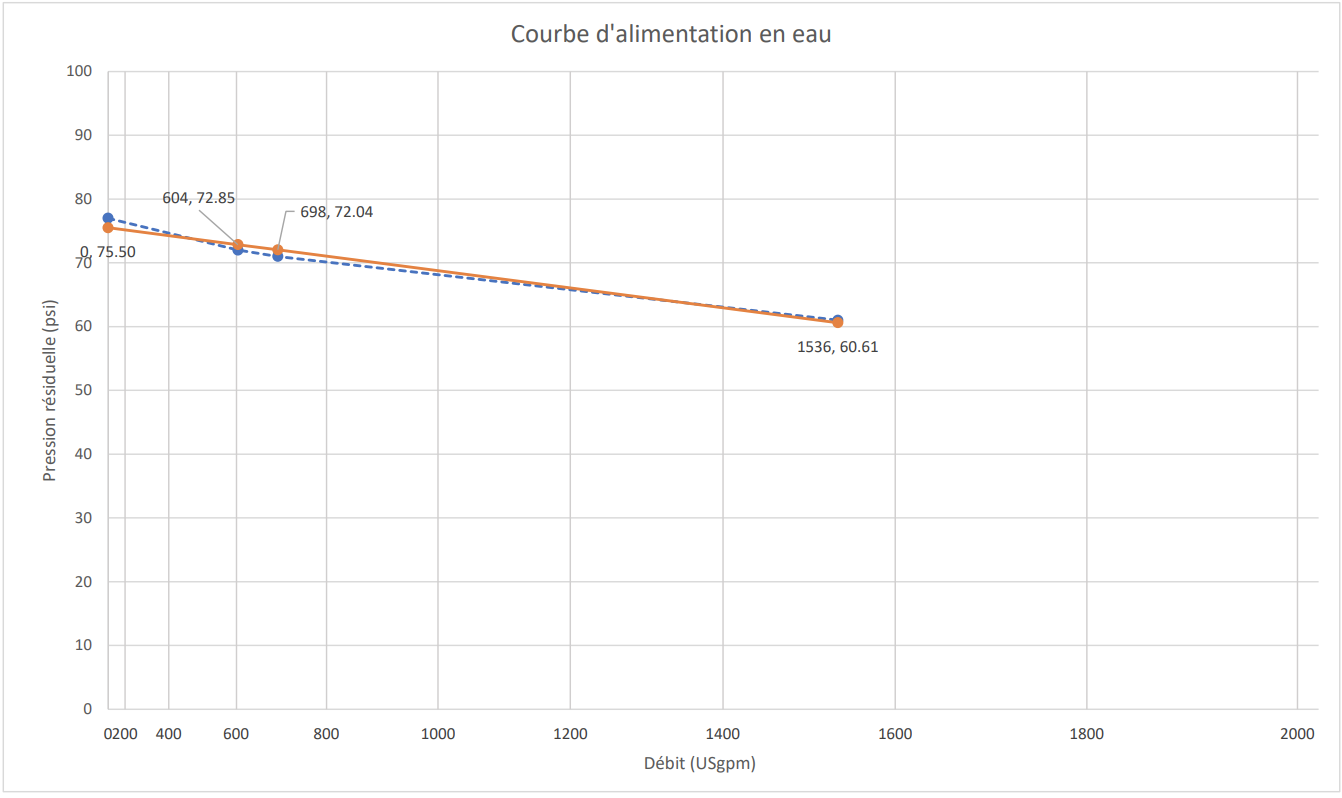
The objective of a fire hydrant water flow test is to establish the water supply curve (residual pressure versus water flow rate) and thus determine whether the water supply is sufficient to effectively fight a fire.
Applicability
A fire hydrant water flow test is required to verify whether the water flow rate and pressure supplied by the water network are sufficient to:
- supply water to the fire protection system of a building;
- provide the water necessary for firefighters to fight a fire;
- satisfy the water needs of an industrial process;
- satisfy the domestic water needs of a building.
It should be noted that:
- A flow test is required by building codes when designing a fire protection system and the results of this test are valid for a limited period of 12 months;
- The NFPA 291 standard recommend that municipalities test their fire hydrants every 5 years.
- Insufficient water supply delays fire fighting and fire control. Knowing that a building fire doubles in size every minute, it is critical that all the fire protection systems are at maximum efficiency at all times.
Specifications and requirements
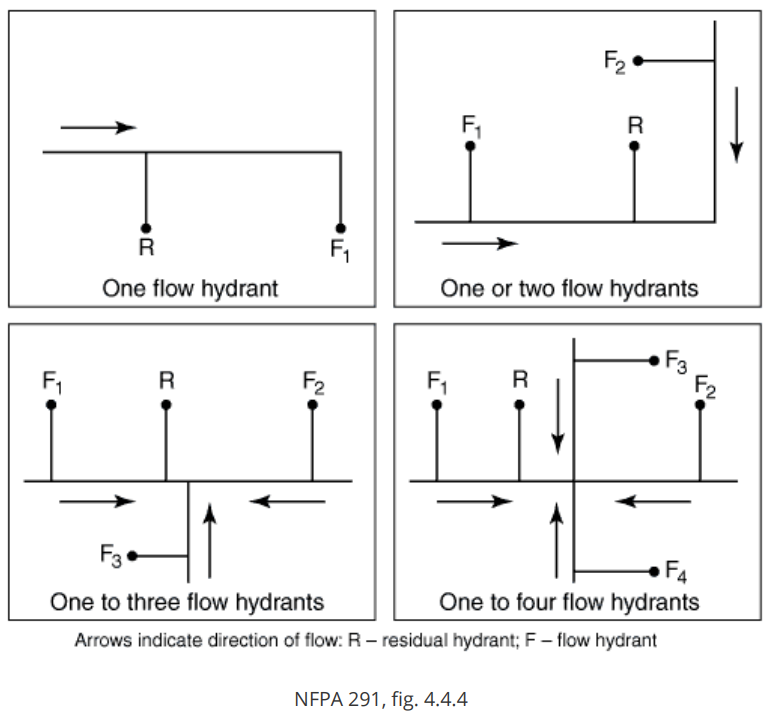
In Quebec, a fire hydrant water flow test must be supervised by a professional engineer and carried out in accordance with the procedure prescribed by standard NFPA 291 Recommended practices for flow tests and identification of fire hydrants.
The engineers at Consultants SynQ Inc have the expertise and experience necessary to carry out these tests with precision and rigor so that you can have the assurance that your fire protection systems will be reliable and therefore will allow you to optimize their design and operation.
Our testing capacity
- Between 500 gpm et 4500 gpm with our Hose Monster (tm)
- Up to 6000 gpm with our diffusers
- 2.5in NH/NST/QST, 4in Storz, 4in NH/NST, 4.5in NH/NST hydrant connexions
Our equipment
-
Calibrated pressure gauges with a 1 psi minimum accuracy.
-
Pressure sensors allowing the recording and analysis of test data in real time.
-
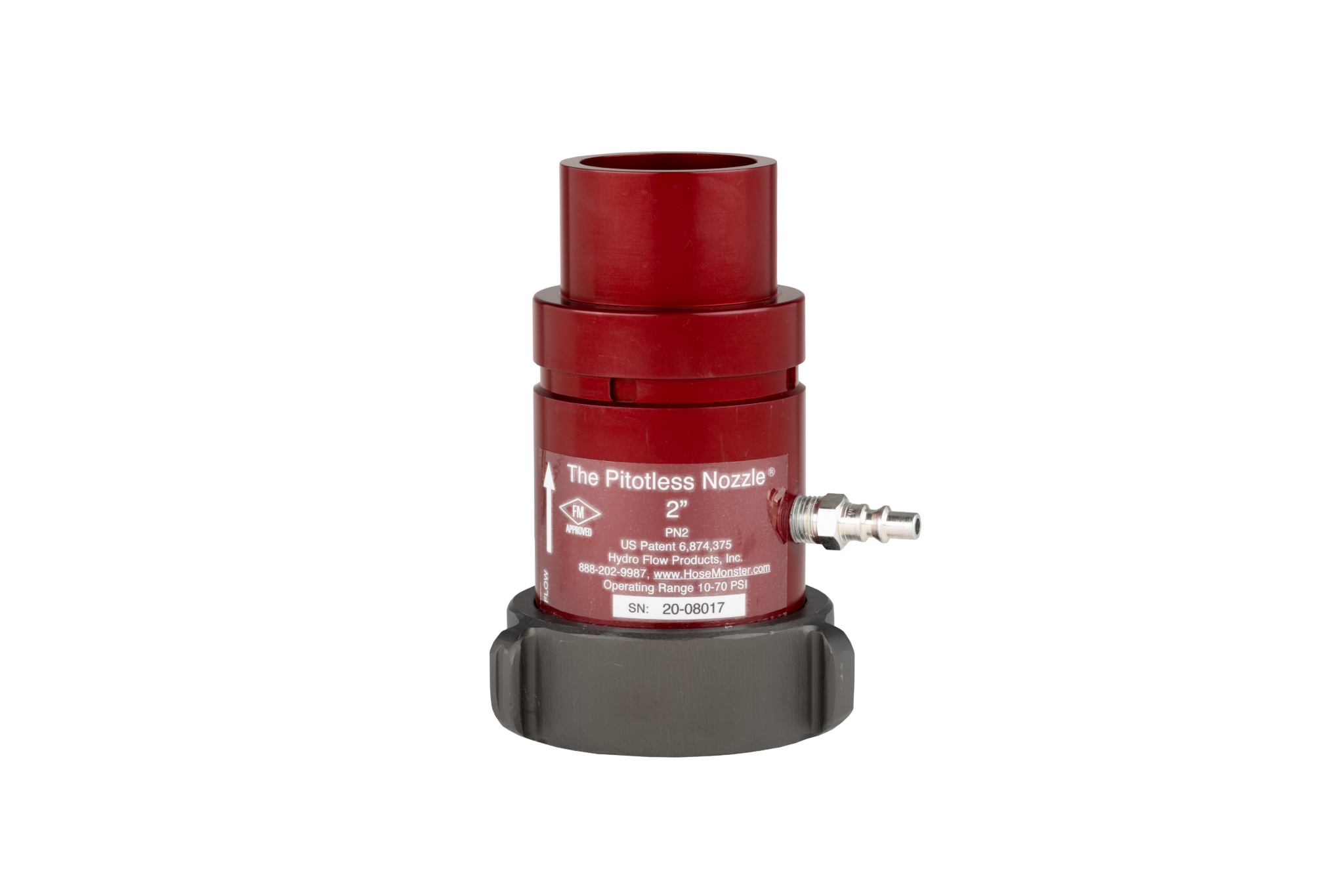
“Hose Monster (tm)” diffusers equipped with “pitotless” nozzles.
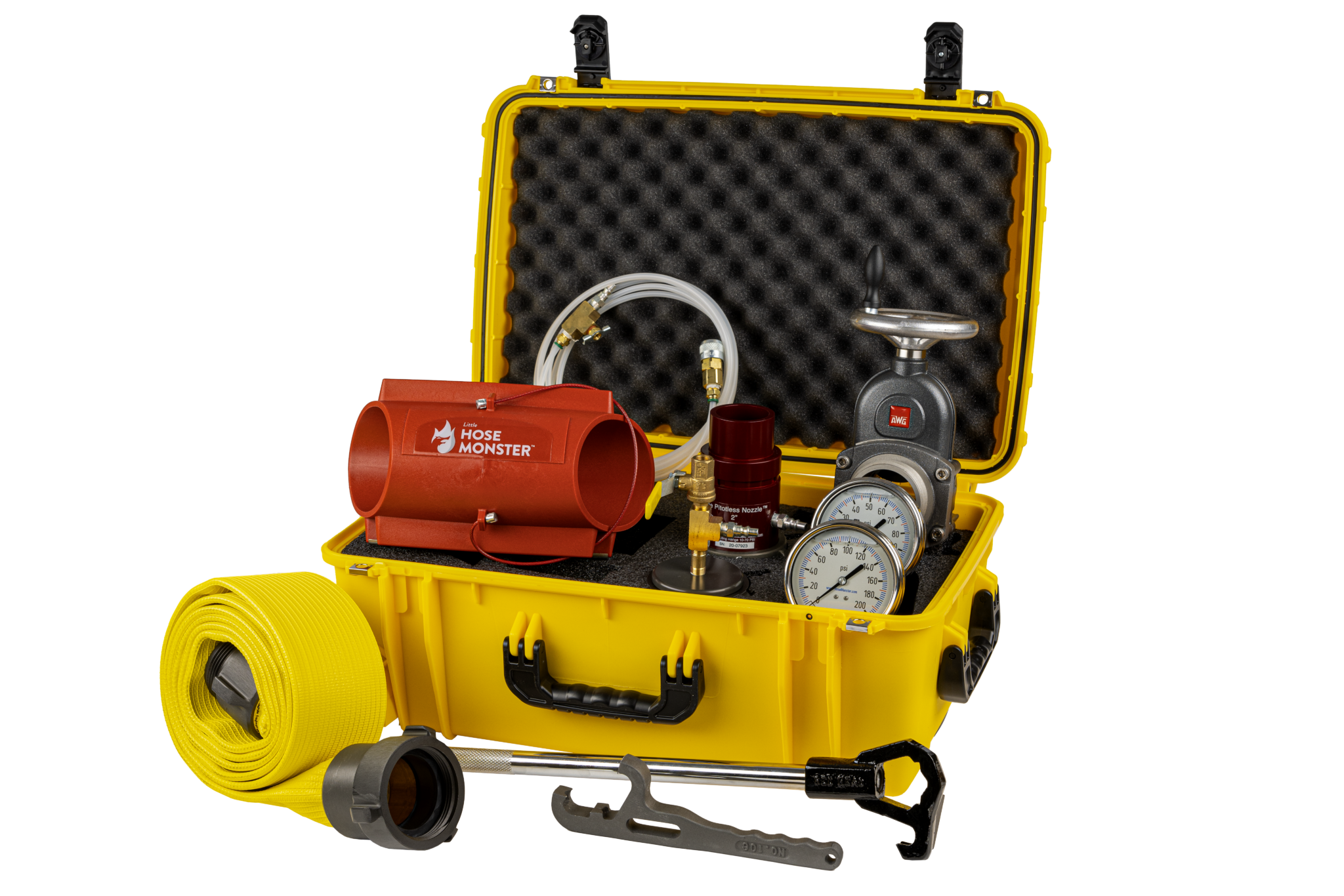
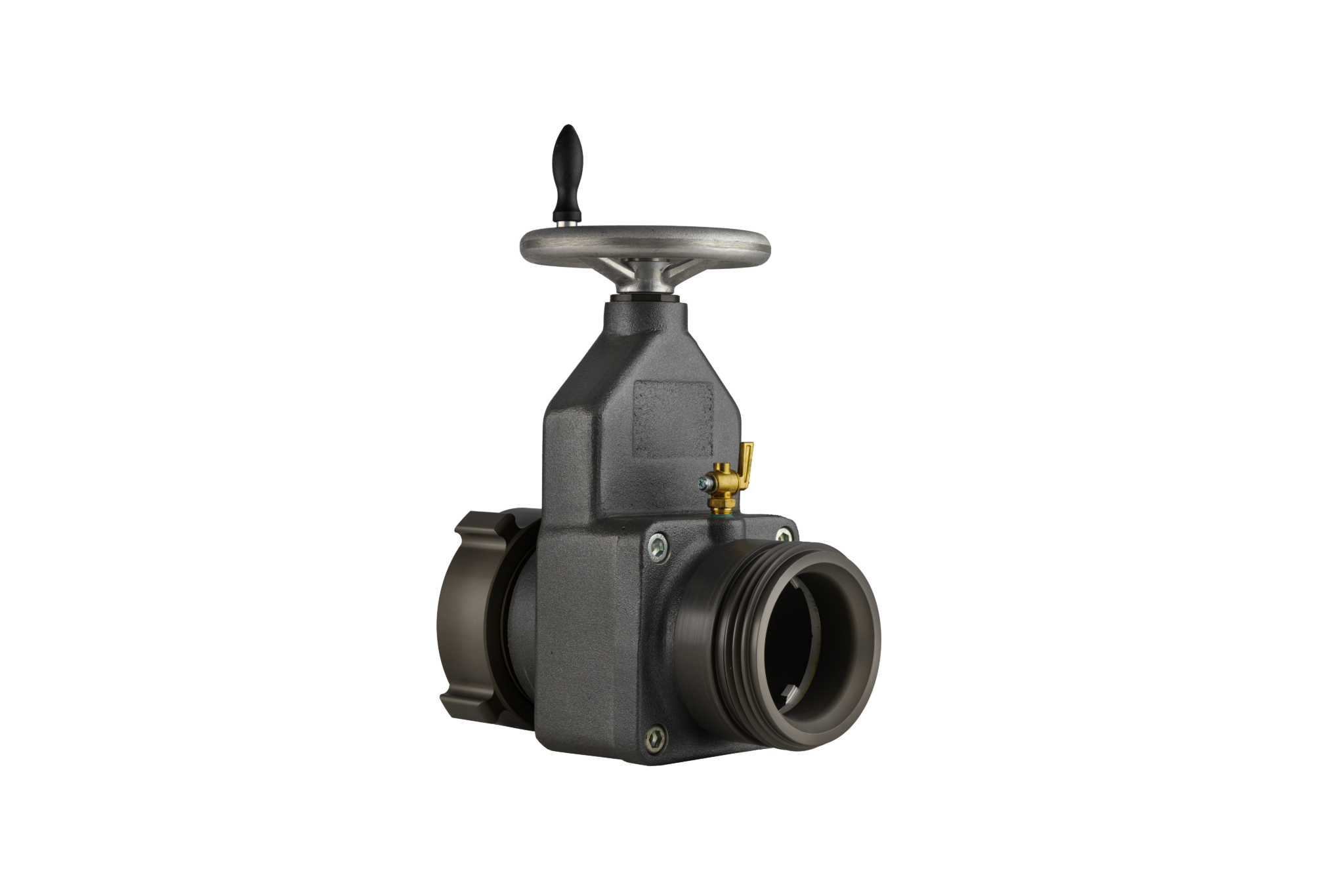
- Gate valves.
- 2.5in, 3in and 4.5in hoses to connect the Hose Monster to one or more fire hydrants.
- Diffusers.
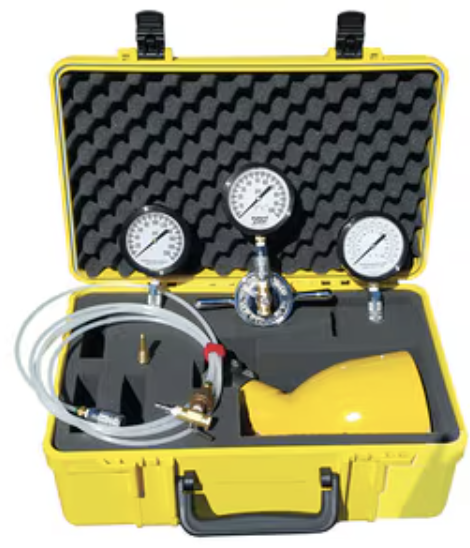
Tools:
- Various adapters that fit with various fire hydrant nozzles to ensure safe and efficient flow of water.
Calibration
All our measuring equipment are calibrated annually by an accredited laboratory. Our test reports includes a copy of each equipment calibration certificate.
Health and Safety
Safety is SynQ Consultants’ top priority.
All personnel assigned to carrying out the tests must wear their personal protective equipment (PPE), during the test preparation and test execution:
- Safety glasses
- Yellow or orange reflective jacket
- Gloves
- Safety boots

It is important to always consider the risks related to a pressurized system and to properly tighten all joints and plugs before pressurizing the equipment.
A security perimeter must be established taking into account the test scale, the site topography and the traffic density.
The environment must be protected to avoid soil erosion and excessive water accumulation. Water must be directed to the municipal water collection system or the customer's private facilities. Water should never be directed to natural waterways.
Our reflex: Always step back, observe and think before acting.
Test preparation
- We work with municipal authorities and fire departments to obtain testing permits and to determine specific parameters to be considered. In addition, we study the municipal piping plans and the network hydraulic parameters in order to determine the which fire hydrants will be tested.
Typical test procedure
This partial and simplified procedure shows an overview of testing stages:
- Complete the "before testing" checklist;
- Install closed gate valves on fire hydrants;
- Open the fire hydrant valves;
- Open the gate valves to clean out any debris that may have accumulated in the pipes or in the hydrant column, then slowly close the gate valves;
- Connect the testing equipment to the gate valves;
- Purge air from testing equipment to ensure measurement accuracy;
- Take an initial pressure reading on the gauges before starting any flow;
- Take several measurements at different flow rates. More measurements provides a better water supply curve resolution;
- Complete the "after testing" checklist.
IMPORTANT: Always handle fire hydrants with care; open and close slowly to avoid water hammering which could damage the fire hydrants. Remember to wait until the fire hydrants are properly drained before replacing the plugs.
Reports
Test reports generally contains the following information:
- Project or building informations;
- Testing equipment used and standpipes subjected to testing;
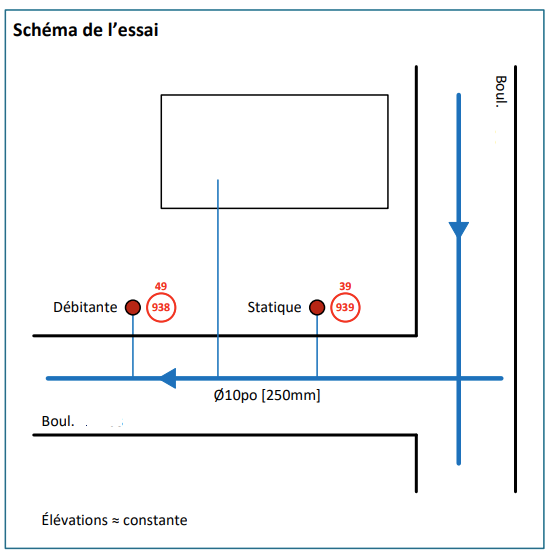
- Test network diagram;
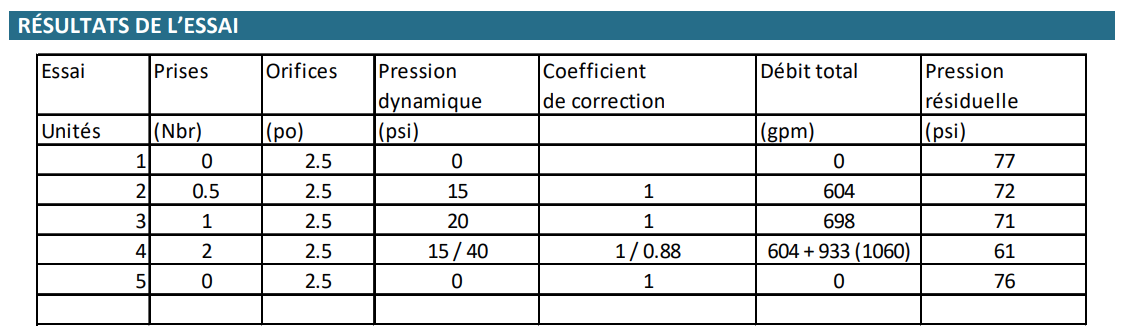
- Results in the form of tables and curves;
- Equipment calibration certificates;
- Municipal pipes plans.
The test report template proposed by the Ordre des ingénieurs du Québec is available by following this link: Résultats des essais d’écoulement sur bornes d’incendie
Need a fire hydrant water flow test carried out ? Contact us:
- inspection@synq.ca or 514-668-1518
Note: All images and trademarks are the property of their respective owners.